
Is UGC Worth It? How to Choose Between Pet, Tech and Other Niches (Including If You’re 40+)
Is UGC worth it? Yes, if you can film short, honest product videos on a regular schedule and pitch brands without taking rejection personally. It needs a phone and some patience. It is a poor fit if you want fast income or dislike every part of being on camera.
The rest of this article helps you test that against your own situation, compares five common niches by what each one demands, answers the over-40 question directly, and ends with a niche pick for each type of creator.
What does UGC creation actually ask of you?
UGC creation asks you to make videos and photos of products that a brand then uses in its own ads and on its own channels. You are paid for the content you deliver, so your audience size is not the product. Your reliability and the quality of what you hand over are.
That work breaks down into several jobs, and most of your time goes to the ones people forget:
- Filming: shooting clean, well-lit, well-framed clips with a phone, usually several takes of the same moment.
- Scripting: writing a short spoken or on-screen script that opens with a hook and shows the product doing something specific.
- Editing: trimming, adding captions, fixing audio, and exporting in the format the brand asked for.
- Pitching: finding brands, writing short messages, and following up when nobody replies.
- Revising: taking feedback such as “reshoot the opening” or “the product name is hard to read” without friction.
- Admin: agreeing on deliverables, delivering files on time, and keeping track of who owes you what.
Filming is a small part of this. A creator who films well but never pitches, or who misses deadlines, will earn little. A creator with ordinary footage who communicates clearly and delivers on time will often be rehired.
Income also arrives unevenly at the start. Pitching takes time before the first yes, and a single brand relationship can take a while to develop into repeat work. If you need dependable money from week one, UGC is a poor first choice. As a side income or a new skill built over months, it makes sense.
Does UGC suit your personality, gear and weekly time? A 6-question self-check
You can answer this in ten minutes, and it costs nothing. Answer each question honestly with yes, partly or no.
- Can you watch yourself on video without wanting to quit? You do not need to love it. You need to be able to review ten takes of your own face or voice and pick the best one. If that feels unbearable, plan on hands-only content, which is covered in the table below.
- Can you send a pitch and get no reply without feeling it as a verdict? Most outreach goes unanswered. The skill is sending the next message anyway.
- Do you have a phone with a decent rear camera? A recent mid-range phone is usually enough to start. If your phone’s footage looks grainy in ordinary daylight, fix that before anything else.
- Can you find a quiet corner with good light? A window with soft daylight, a plain wall or tidy surface, and a room without echo or background noise cover most beginner needs. Lights and microphones can wait until the work justifies them.
- Can you protect a set block of hours each week? Pick a number you can keep, such as one session for filming and editing and one shorter session for pitching. Consistency matters more than a burst of effort followed by silence.
- Are you willing to learn basic editing? Captions, cuts and audio cleanup are learnable with a free or low-cost editing app. You need patience more than talent.
Count your answers. If you said yes to most and partly to the rest, you are a good candidate and can move on to choosing a niche. If you had two or three “no” answers, look at which ones. A weak phone and a noisy room are cheap to fix. A strong dislike of pitching or a complete lack of weekly time is harder to fix, and you should settle those before spending anything.

Do not buy gear to find out whether you like the work. Film five practice videos with what you own first. The experience will tell you more than any equipment list.
What does pet UGC demand from a creator?
Pet UGC demands access to a real animal that will cooperate with a camera, and patience for the many takes that requires. Brands in this niche sell food, treats, toys, beds, grooming products, leashes and accessories, and they want to see the product used with a pet in a believable way.
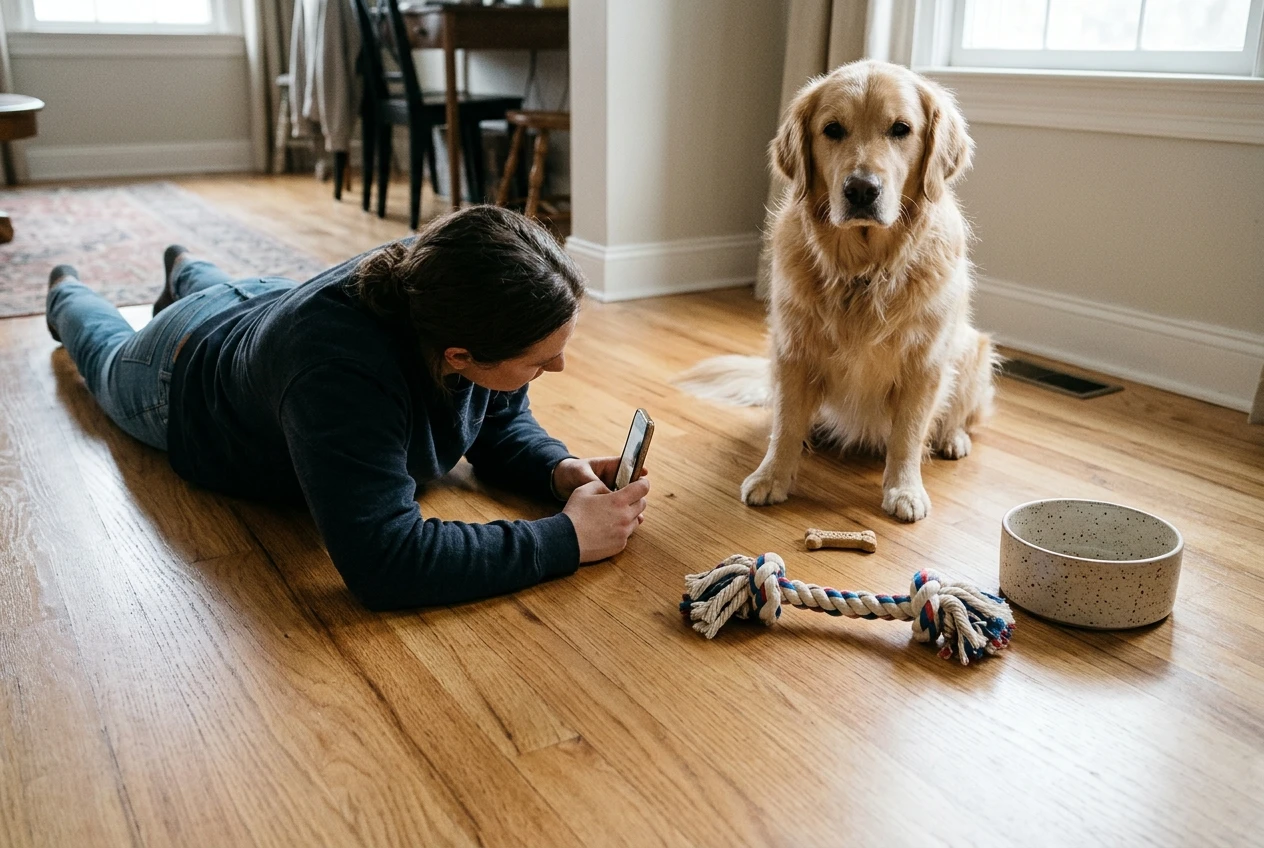
The practical demands are specific:
- An animal that tolerates filming. A dog that sits for a treat or a cat that ignores the camera makes your work much easier. An anxious or very energetic animal means long sessions and few usable clips.
- Time for retakes. Pets do not follow scripts. Expect to film far more footage than you will use, and to wait for the moment when the pet reacts naturally.
- Camera work at pet height. Filming from standing height makes most footage look flat. You will often be on the floor.
- Care with safety. Follow the brand’s instructions for any food, treat or product, and do not film a pet using something in a way it is not meant to be used. If you are unsure whether a product suits your animal, do not feature it.
- Honest reactions. If the dog ignores the toy, you cannot present it as a favorite. Brands usually prefer natural footage, and viewers can tell when a reaction is staged.
Pet UGC rewards warmth and observation more than technical skill. Its limit is that you can only work on products suited to the animals you have. If you have no pet, or only one species, your range is narrow, and you would need to borrow an animal, which adds logistics and requires the owner’s consent.
It also carries more variability in output. Two sessions of the same length can produce very different amounts of usable footage, which makes it harder to plan your week.
What does tech UGC demand from a creator?
Tech UGC demands that you understand a product well enough to explain it accurately in under a minute. Typical products include phone accessories, chargers, apps, smart home devices, desk gear, headphones and small gadgets.
What this niche asks of you:
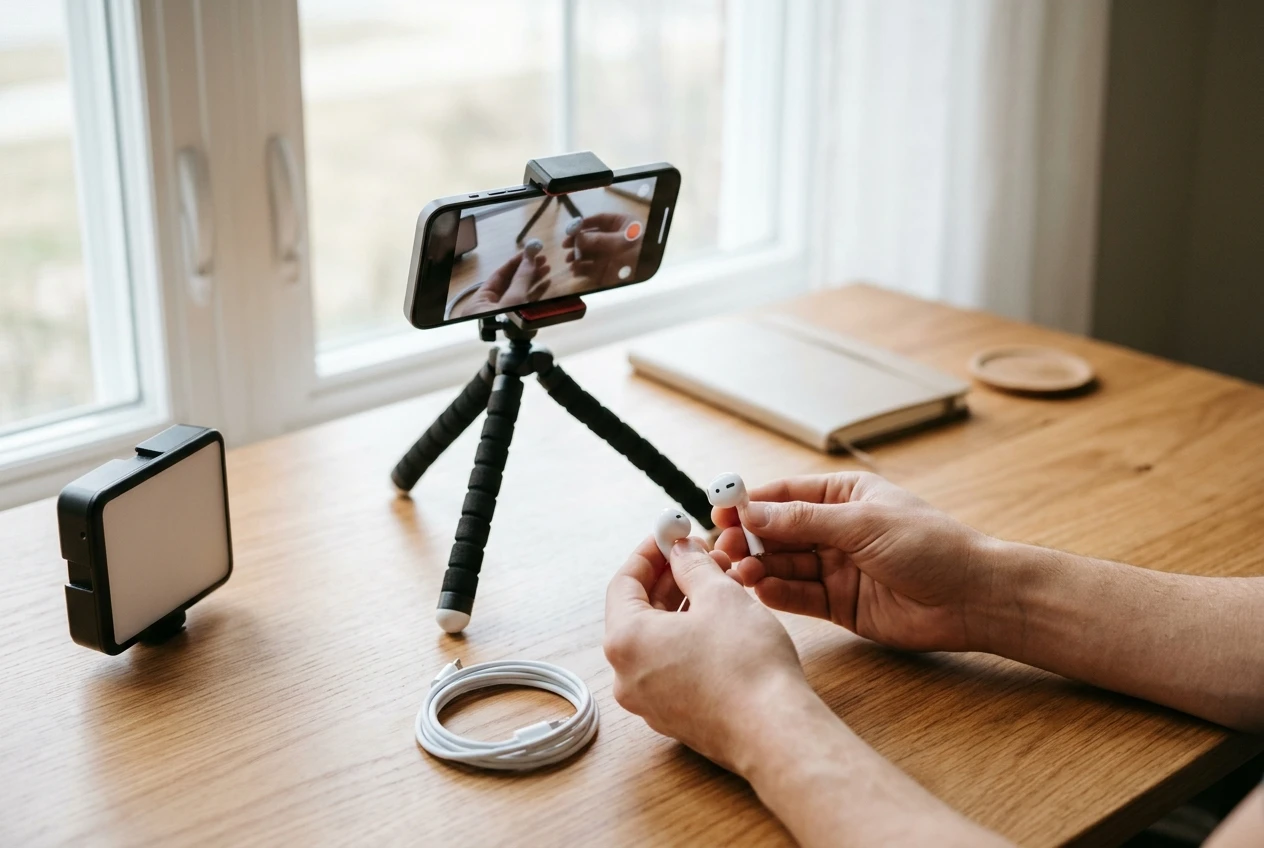
- Clear explanation. You need to show what the product does and why it is useful, in plain words, without drifting into jargon.
- Accuracy. Only state what the product can do. If a brief gives specifications, use those and do not invent your own. A wrong claim about battery life or compatibility creates problems for the brand and for you.
- Clean visuals. Screens reflect light, cables tangle, and fingerprints show. A tidy desk, a soft light source placed to avoid glare, and a steady hand or a phone stand all matter.
- Good audio. Voiceover or spoken demos need clear sound. Close microphones are not required at the start, but a quiet room is.
- Screen recording skills. For apps and software, you may need to record your phone or computer screen and combine it with your own footage. This is learnable in an afternoon.
Tech suits methodical people who enjoy figuring out how something works. It is also a good fit for those who prefer not to show their face, since hands, screens and voiceover carry most of the content. The challenge is that you must actually understand each product, which takes more preparation per video than a pet or food clip. You also need to be comfortable saying what a product does not do when a brief calls for honest limits.
How do pet, tech, home, beauty and food UGC compare side by side?
The five niches differ most in how much of you appears on screen, what your surroundings must look like, and how much preparation each video needs. This table sets them side by side.
Niche What it demands from you Setting and gear On-camera need Main difficulty Suits you if Pet A cooperative animal, patience, care about product safety Floor-level filming, good daylight, treats or toys to direct the animal Low to medium; the pet is the focus, you can stay mostly out of frame Unpredictable footage and many retakes You have a calm, food-motivated pet and enjoy observing animals Tech Accurate understanding of the product, clear explanation Tidy desk, glare control, steady phone, clear audio Low; hands, screen and voiceover often work Preparation time and avoiding wrong claims You like working out how things function and explaining them Home Showing a product in real use in a lived-in space A clean, well-lit room, good framing of kitchens, bathrooms, living areas Low; mostly hands and rooms Making ordinary spaces look good without staging them falsely You keep a tidy home and like practical products Beauty Close-up work on skin, hair or nails; honest results Strong soft light, mirror or steady close-up framing High; often your face or skin Skin and hair differ, and results claims need care You are comfortable close to the camera and can describe results honestly Food Preparing or serving a product attractively, quickly Good daylight over a clean surface, props, time to cook and clean up Low to medium; hands and food are the focus Food changes appearance fast, and shoots involve cooking and cleanup You enjoy cooking and have patience with repeated takes
Some notes the table cannot hold:
Home covers cleaning products, storage, kitchen tools, bedding and decor. Your own home is the set, so the niche costs little to start. The risk is sameness: many creators shoot similar clean-counter videos, so a clear, specific demonstration of the problem the product solves is what stands out.
Beauty is the niche where your face and skin matter most. A product that worked on your skin may not work on someone else’s, so describe what you saw and avoid promising outcomes. Brands in this area may also have rules about what claims can be made, so follow the brief closely.
Food needs the most physical effort per video, since you cook, plate and clean up for each shoot. Light matters a great deal, and food looks best in soft daylight, so your kitchen’s windows may decide how well you can work.
Is UGC a good fit if you are 40 or older?
Yes. Nothing in UGC requires you to be young, and the skills it needs are ones many adults over 40 already have: reliability, clear communication, and the ability to follow a brief and meet a deadline. Brands sell many products to people in this age group, and a creator who resembles the buyer can be more believable than one who does not.
That said, there are real points to consider:
- Technology comfort. If editing apps and file sharing are new to you, expect a learning period. It is a matter of practice, and free tutorials cover the basics.
- Camera self-consciousness. Many people of every age dislike seeing themselves on video. If that includes you, hands-only content in tech, home and food keeps your face out of the shot while you build confidence.
- Brief matching. Some briefs ask for a particular look or age range. You will not match every one. The same is true for a creator of any age, so treat it as part of how the work is distributed and keep pitching.
- Time and energy. If you work full-time or care for others, a small, fixed weekly block is more realistic than an ambitious schedule. Pick a pace you can sustain for months.
A practical advantage is that you may already have credibility in a category through years of use: a long-time pet owner, a person who has managed a household, a keen cook, or someone who has bought and used many gadgets. Your experience with a product type can make your demonstrations specific, and specifics are what make a video convincing.
You do not need to announce your age or avoid mentioning it. Make good videos for products that match your daily life, and let the work speak for itself.
Which niche should you pick first?
Pick the niche where the product, the setting and the on-camera demand already match your life, because that will let you produce good samples quickly with no new purchases. Here is a pick for each type of creator.

- You have a calm pet and like animals: start with pet UGC. You already have the main requirement, and a treat-motivated dog or an easygoing cat will give you usable footage within a few sessions. Keep every video within what is safe for your animal.
- You are methodical and dislike appearing on camera: start with tech UGC. Hands, screens and voiceover let you stay out of the frame, and your care with accuracy is an asset. Practice with gadgets you already own.
- You keep a tidy home and want the cheapest start: choose home UGC. Your own rooms are the set, and kitchen and cleaning products are easy to demonstrate. Work on showing one clear problem and one clear result per video.
- You are comfortable close to the camera and care about skincare or hair: choose beauty UGC. Be ready to describe results honestly and to follow a brief’s claim limits exactly.
- You enjoy cooking and have good window light: choose food UGC. Accept that each video involves preparation and cleanup, and plan your sessions accordingly.
- You are over 40 and unsure: begin with whichever of home, tech or food lets you keep your face out of the shot, then add on-camera work when you feel ready. If you own a pet and are comfortable with it, pet UGC is equally reasonable.
- You have little weekly time: choose tech or home. Both can be filmed in short sessions without waiting on an animal or cooking a dish.
Make your choice, then film three short sample videos for products you already own in that niche. If you finish them and want to make more, UGC is worth continuing. If the filming and editing feel like a chore even in a niche that suits you, that is a clear answer too, and you will have reached it without spending anything on gear.